After a monsoon storm, the order of operations matters: stay safe, document the damage, keep water out, call your insurer, and only then talk to roofers. Contractors who approach you right after a storm may press you to sign quickly. You do not have to. This guide covers what the monsoon can do to a roof, what the Arizona Department of Insurance says to do first, and how to size up a contractor you did not call.
When monsoon season is
The National Weather Service defines the monsoon as the period from June 15 through September 30 across the Southwest (NWS Tucson, Monsoon Safety (opens in a new tab); NWS Phoenix says the same on its monsoon awareness page (opens in a new tab)). NWS Phoenix describes it as the time during which monsoon hazards are most likely to occur, which is not a forecast for any given day.
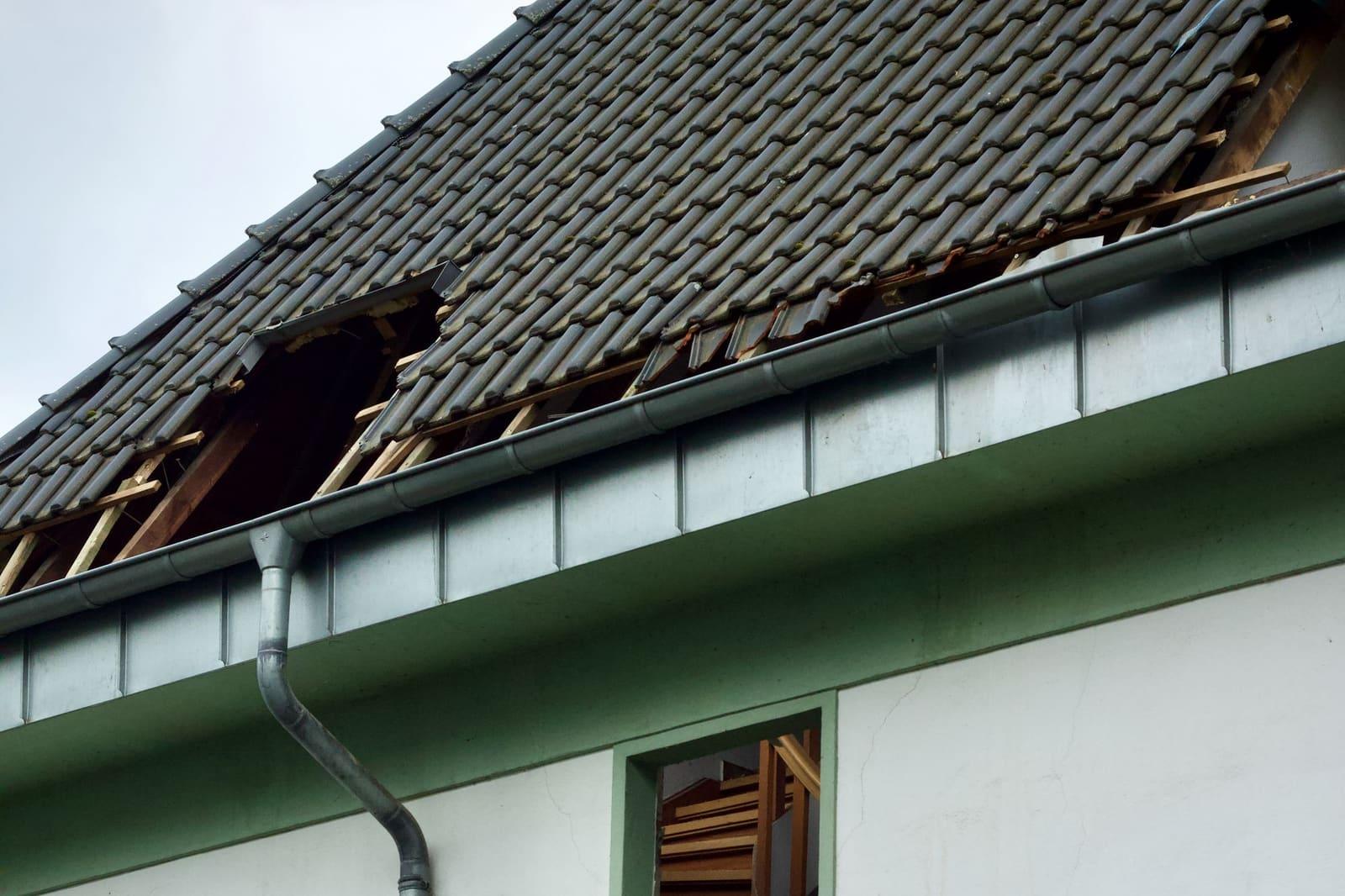
What the storms can do to a roof
The NWS lists lightning, high winds, dust storms, flash flooding, and tornadoes among monsoon hazards. Two numbers are worth knowing for roofs:
- A Severe Thunderstorm Warning means a thunderstorm with damaging winds of 60 mph or greater is about to occur or is under way, and hail over 1 inch in diameter is possible.
- Thunderstorm winds can exceed 100 mph over a fairly large area, and the damage can look very much like tornado damage.
What that does to your roof depends on the roof type. IBHS says a tile roof’s individual tiles can be swapped out when they are damaged (IBHS (opens in a new tab)). On a coated foam roof, it lists divots, gouges, splits, and holes from flying debris as damage, and says hail and wind-driven debris typically do not make the roof leak and can usually be repaired (IBHS (opens in a new tab)). Either way, a close look by a qualified roofer is the only way to know what happened.
First steps after a storm
The Arizona Department of Insurance’s guide to storms and disasters (a 2015 version; check the department’s site for updates) lists the basics (Insurance & Storms or Disasters (opens in a new tab)):
- Document the damage. Take photos or video of the damage to your home.
- Contact your insurance company before you repair, replace, clean, or dispose of anything. Your policy requires you to show damaged property to the insurer, and if you begin repairs before the company can confirm and evaluate the damage, it could deny your claim.
- Prevent further damage. Your policy may require you to take reasonable steps even if you are not sure the loss is covered. The department’s example is boarding up a window or putting a tarp on the roof to keep rain out.
- If you must make emergency repairs first, call your insurer and ask what documentation it will accept. Photograph the damage and the repairs, and keep receipts.
Stay off the roof yourself. IBHS warns that walking on a tile roof can crack tiles.
What insurance may and may not cover
Coverage depends on your policy, so read it and ask your agent. The department’s guide makes a few general points:
- Homeowners policies may cover wind, rain, lightning, and hail damage, but policies have limits and exclusions.
- Flood damage is not covered by homeowners insurance. It takes separate flood insurance.
- Water damage inside from rain may not be covered unless the rain came in through a roof or wall damaged by wind or hail.
- Roof coverage is generally limited to the portion of the roof damaged by falling objects, rain, snow, or wind.
- Filing a claim can affect your rates or renewal, and if you think repairs will cost less than your deductible, the department says to consider paying yourself. If you only have questions, tell the company you are making an “inquiry,” not filing a claim.
The department’s consumer line is 602-364-2499 (insurance.az.gov (opens in a new tab)).
If a contractor you did not call shows up
The Federal Trade Commission warns that scams follow weather emergencies, and its advice for hiring a contractor applies after a monsoon storm too (FTC, How to avoid scams after weather emergencies (opens in a new tab)):
- Confirm the contractor’s license and ask for proof of insurance.
- Get estimates from more than one contractor, and do not automatically choose the lowest bid.
- Get a written contract and read it carefully.
- “If they want cash up front, walk away.”
- Never sign your insurance check over to a contractor.
In Arizona, check the license on the Registrar of Contractors’ website before you sign anything. It is against state law to act as a contractor without a license in good standing unless an exemption applies (A.R.S. 32-1151 (opens in a new tab)). The small-job exemption (work under $1,000) does not apply when a local building permit is required, and anyone relying on it to advertise must say they are “not a licensed contractor” (A.R.S. 32-1121 (opens in a new tab)). Our step-by-step guide is How to Check an Arizona Roofing Contractor’s License.
A cancellation right that may apply
Arizona has a three-business-day cancellation right for “home solicitation sales.” It covers a sale where the seller “personally solicits the sale without prior invitation, appointment or consent” and you agree to it at a home other than the seller’s (A.R.S. 44-5001 (opens in a new tab), 44-5002 (opens in a new tab)). That could fit a door-to-door storm pitch. It has an emergency exception: you cannot cancel if you asked the seller to start without delay because of an emergency and the seller made a substantial beginning before you cancelled (A.R.S. 44-5007 (opens in a new tab)). If you invited the contractor, the definition may not cover you. Read your contract and ask before you rely on this right.
Before the next monsoon
Since the season starts June 15, a spring check by a roofer you have chosen carefully can catch loose tiles or worn coating before the first storm. For what to ask them, see Questions to Ask a Roofing Contractor. If you have tile, also read about tile roof underlayment.